
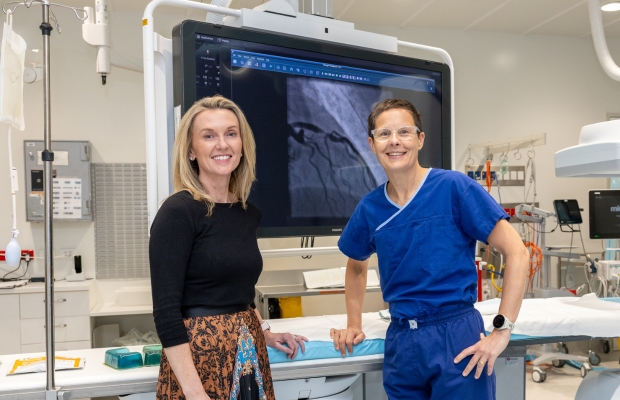
You can shape the future of healthcare

Support our Tax Appeal

Support Early Detection of Coronary Artery Disease

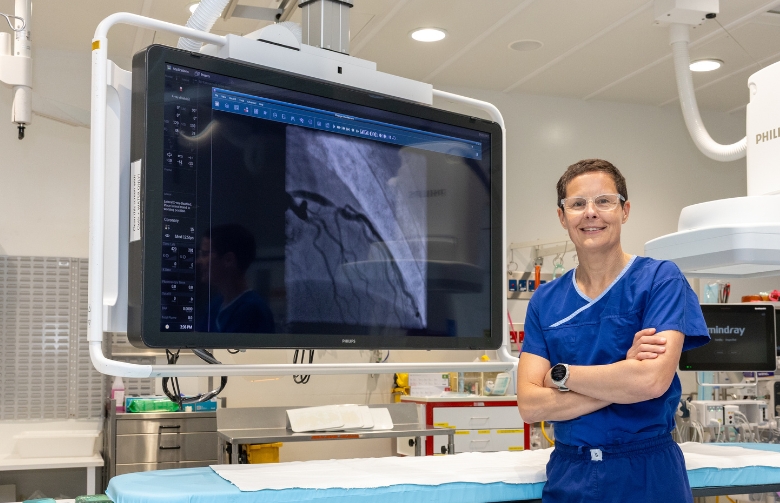
Heart attacks are the leading cause of death worldwide. In Australia, one occurs every 9 minutes, often with no warning. More than 50% of patients experience no symptoms and 27% have no known risk factors. Researchers at Royal North Shore Hospital and the University of Sydney are developing a world-first screening program combining genetic testing, blood biomarkers and advanced imaging to detect silent coronary artery disease before a heart attack occurs. Philanthropic support will help scale this groundbreaking approach and bring early detection into everyday care.
Royal North Shore Hospital
23 Projects
View Facility
0%
$8,000,000
$80
$7,999,920

A simple blood test could change everything

Coronary artery disease is often silent until a life-threatening heart attack occurs. A world-first screening approach is being developed that combines blood-based biomarkers, genetic risk assessment and advanced imaging to identify disease before symptoms appear. Early studies have already delivered promising results. With philanthropic support, the next phase will validate new biomarkers, expand engagement with general practice and accelerate the translation of this research into national clinical care. 

“With the treatments we have today, ALL coronary artery disease patients can achieve full remission. We are very motivated to shift the paradigm to early detection, so that heart attacks become extinct.”

– Professor Gemma Figtree AM – Interventional CardiologistRoyal North Shore Hospital 


A silent killer hiding in plain sight

Over 50% of heart attacks

occur in people with no prior symptoms

27% of first-time

heart attack patients have no known risk factors

Heart attacks occur every 9 minutes

in Australia, with a death every 75 minute

Current prevention models rely heavily on traditional risk factors such as cholesterol and blood pressure, yet these measures miss many people who go on to develop coronary artery disease. Earlier detection offers an opportunity to intervene before symptoms appear and before irreversible damage occurs. 

An outdated model of prevention 

Many people with significant coronary plaque appear healthy and do not meet traditional definitions of high risk. At the same time, millions of people with elevated cholesterol never develop coronary artery disease. Australians in rural and remote communities, First Nations people and those in lower socioeconomic areas experience disproportionately high rates of cardiovascular disease and poorer outcomes. Existing screening approaches are not identifying enough people early enough. 

“For too many people, their first heart attack is their first sign of disease.” 

– Professor Gemma Figtree AM – Interventional Cardiologist, Royal North Shore Hospital 

Precision detection before a heart attack happens

Led by Professor Gemma Figtree AM, a revolutionary three-step screening model is bringing precision medicine into everyday healthcare.

This approach will: 

  • Identify patients with silent coronary artery plaque through new blood-based biomarkers
  • Confirm disease and map plaque characteristics through CT imaging
  • Support GP-led treatment pathways to prevent progression and reduce heart attack risk

Already underway:

BioHEART: More than 5,000 participants have contributed CT images and blood samples, leading to the discovery of multiple promising biomarkers

ESCALATE: A pilot study testing biomarker-guided triage and polygenic risk scores in general practice

The results indicate that polygenic risk scores predict coronary artery disease more accurately than cholesterol alone, supporting development of affordable GP-accessible blood tests. 

Illustration of a heart
WHY YOUR SUPPORT MATTERS

From early detection to zero heart attacks

Philanthropic support will help transform heart attack prevention from reactive treatment to proactive detection. The program will accelerate biomarker validation, expand screening access through primary care and ensure equitable access for communities most at risk. 

Your support will help: 

  • Accelerate clinical trials and biomarker validation 
  • Develop scalable blood tests for earlier detection 
  • Build infrastructure for GP-led screening and treatment 
  • Improve access for rural, remote and First Nations communities 
  • Influence national clinical guidelines and screening policy 
  • Reduce deaths, hospitalisations and lifelong health impacts 

Funding overview:
Total investment needed: $8M over 6 years

Support Early Detection of Coronary Artery Disease
Related Clinical Trial Projects

NORTH STAR Van Norton Poche
MuscleMap
Nurse with patient in hospital
Cancer Cellular Immunotherapy Service
Liquid Biopsies
Nurses with patient in hospital explaining concussion test results
Pathways of Care for Traumatic Injuries (PACE-TRI)
Associate Professor Naomi Hammond and Associate Professor Anthony Delaney
Adaptive Platform for Sepsis Care
UP-STREAM
Associate Professor Brendon Neuen with female patient
IRONHEART-CKD
Nurse with patient in her home
Hospital in the Home (HITH)
Dr Philippa Heighes, Professor Geoffrey Tofler
Triggered Acute Risk Prevention (TARP)
You can shape the future of healthcare for all
Give a gift that makes a real difference to our healthcare staff and facilities so they can deliver the best patient care.
Skip to content