Katie’s life changed forever on Christmas Eve 2020. Her eldest son Nicholas was just 18 when he was killed in a car crash. In a single moment, an ordinary family night became a lifetime defined by trauma and loss.
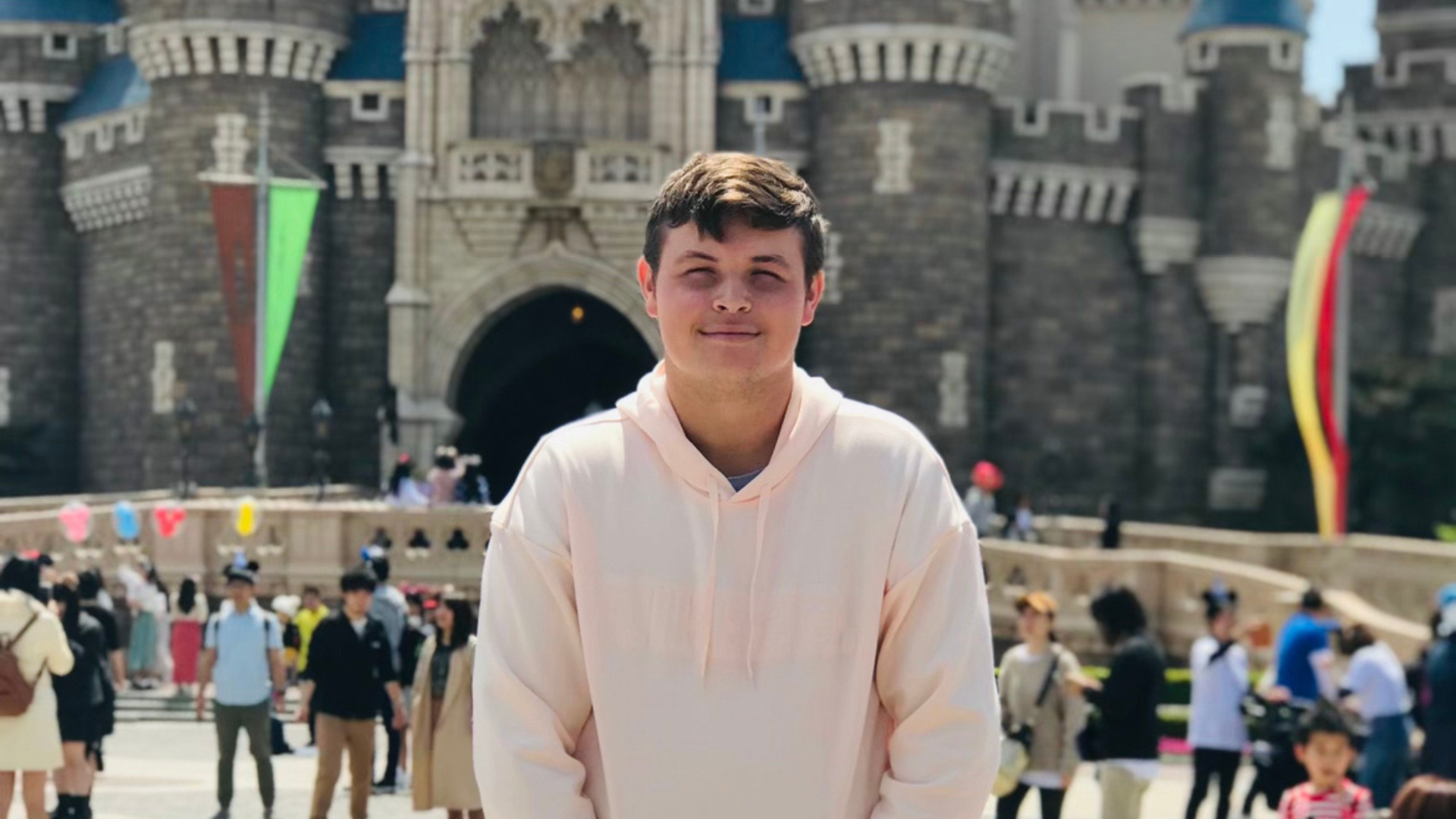
Nicholas was the son Katie never worried about. A dedicated football coach and referee, he was responsible, thoughtful and grounded in a strong sense of right and wrong.
That evening, the family shared dinner together. Katie was preparing food for Christmas Day when Nicholas asked if he could meet friends for dessert. It was a simple, familiar request. Trusting his judgement and the friends he was with, she said yes.
“Nick knew the rules,” Katie says. “He was to be home by midnight.”
As he walked out the door, she had no way of knowing it would be the last time she would see her son alive.
The moment every parent fears: Trauma that changes everything
At 1.30am, Katie’s phone rang. It was Nicholas’ girlfriend saying he had been involved in a car crash and that he’s dead.
Katie walked into his room, expecting to find him there. But he wasn’t. She rushed to the hospital, only to be told there was no casualty matching his description.
Confusion turned to fear as she searched for answers, calling other hospitals and desperately trying to find her son. In the hospital car park, she approached a police officer and explained her situation. As he offered to help, she noticed her son’s name written in his ledger book. It was the moment her worst fears became real.
Later that morning came the knock on the door.
“It’s the knock that nobody ever wants,” admits Katie. “You know your whole world is about to be shattered.”
Officers explained that Nicholas was a passenger in a car travelling at 160km/h that collided with a telegraph pole. He died at the scene. The driver survived with a broken arm.
This is the reality of trauma. It’s sudden, devastating and life-altering. It doesn’t just affect one moment; it reshapes an entire future.
Even though young drivers aged under 26 years make up around 14% of all licence holders, crashes involving them account for almost a quarter of annual road fatalities. Overall, males represent two thirds of all serious injuries and road deaths.
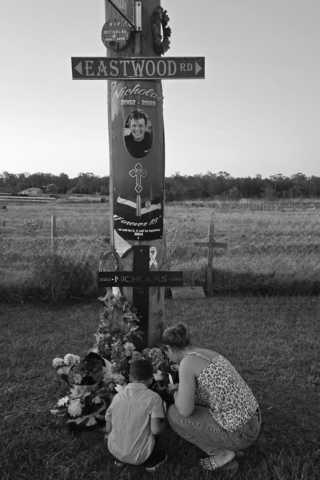
The ripple effect of trauma on families and communities
Nicholas was deeply loved and respected. Friends and the football community rallied around his family, honouring his life in a powerful show of support. His team gathered on the family’s front lawn in their football shirts, paying tribute to their friend. Due to COVID-19 restrictions, his funeral was held at his sports club – Bonnyrigg White Eagles – where more than 2,000 people came to say goodbye.
Katie reflects on the life Nicholas might have lived, the young people he would have mentored and the difference he would have made as a future teacher.
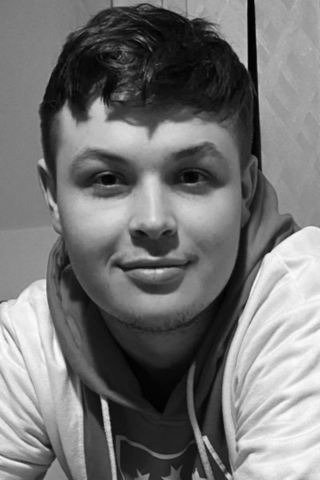
The trauma of his loss continues to shape every part of her and her family’s life. They have to navigate grief, the justice system and the difficult reality that the penalties imposed for fatal driving offences do not always reflect the devastating loss of life.
She believes Nicholas would have told the driver to slow down.
“All the driver had to do was stop,” she says.
Today, Katie describes her life in two parts – before Nicholas, and after.
She carries Nicholas with her on this new path. For every event and milestone he won’t be there for, she takes him with her, but in a different way.
From personal trauma to prevention: Katie’s mission
In the face of unimaginable loss, Katie has chosen to turn her trauma into action.
She is passionate about helping young people understand the risks associated with unsafe driving, from showing off behind the wheel and poor decision-making to the devastating consequences these behaviours can have. Not just on themselves, but on the families and the broader community, to ensure no family has to endure the pain they have.
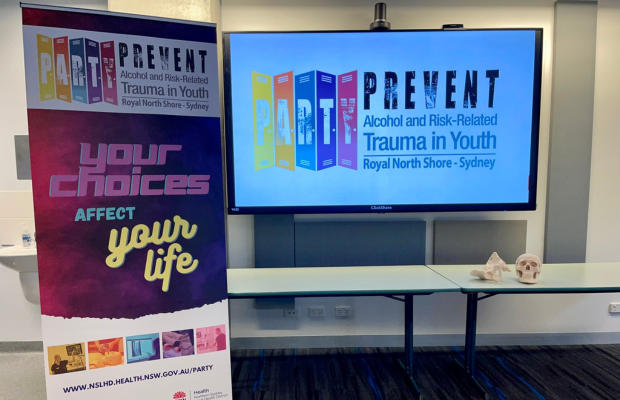
As an ambassador for the Prevent Alcohol and Risk-related Trauma in Youth (P.A.R.T.Y.) Program, she shares Nicholas’s story so young people can see and hear about someone who is just like them and how quickly life can change.
“No one thinks it will happen to them,” Katie says. “Nick didn’t think he wasn’t coming home. But he didn’t.”
Her message is clear: trauma doesn’t only happen to “other people”, it can happen to anyone, at any time.
“They don’t have to be offenders,” she says. “They could be victims, just like Nick.”
Preventing youth trauma through education and awareness
The P.A.R.T.Y. Program is designed for school-age students and young adults aged 15 to 25. It aims to reduce the high incidence of injury and trauma among young people, recognising that around 90% of all injuries are both predictable and preventable.
It focuses on preventing trauma by helping young people understand the real-life consequences of risky behaviour, particularly around driving, alcohol and decision-making.
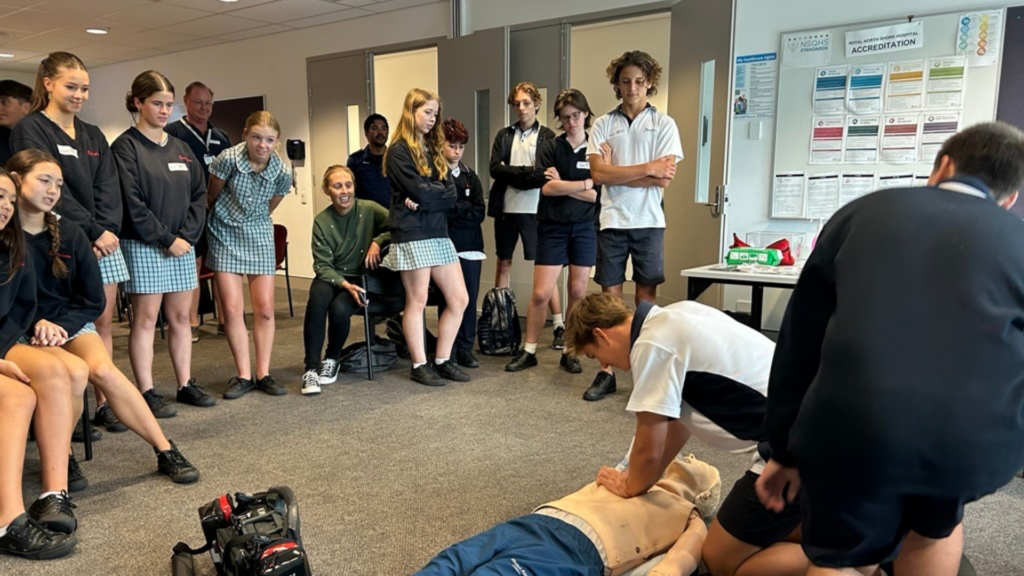
Delivered at Royal North Shore Hospital and Hornsby Ku-ring-gai Hospital, the program provides immersive, reality-based learning that goes beyond what young people see on TV or a computer game.
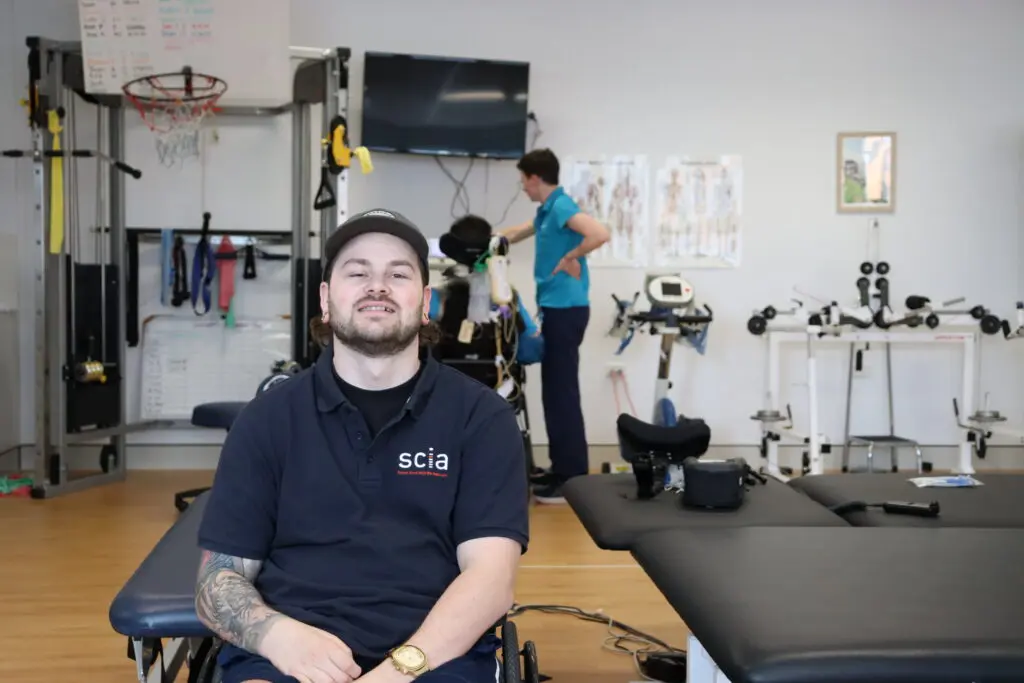
Participants hear from clinicians, emergency responders and people like Katie – those who have lived through trauma and can speak to its lifelong impact.
The program equips young people with practical tools to make safer choices, respond when situations feel unsafe, look out for their friends and plan ahead – always with a Plan B, and even a Plan C.
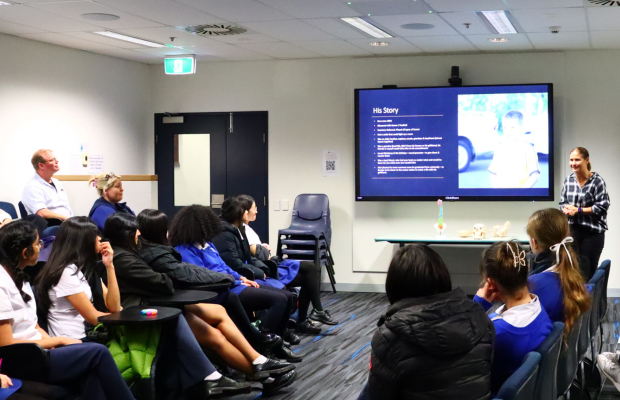
Why your support matters in preventing trauma
Katie believes every school should have access to the P.A.R.T.Y. Program, including those in regional communities.
Trauma among young people is often preventable. Education, awareness and early intervention can save lives and spare families from devastating loss.
With your support, more young people can access this life-changing program, gaining the knowledge and confidence to make safer decisions.
You can help prevent trauma in young lives by donating to the P.A.R.T.Y. Program.
A final message from Katie
“The P.A.R.T.Y. Program is important because it’s real,” she says. “Nick was real. And if sharing his story helps just one young person make a safer choice, then that matters.”
Katie is not asking young people to stop having fun. She is asking them to think ahead, act with care and understand that every decision matters.
Behind every statistic is a real person and behind every young life lost to trauma, is a family changed forever.