In June 2022, Andrew’s life changed in an instant. What began as a simple weekend trip to visit a friend near Kiama, ended in a devastating attack that left him fighting for his life with severe burns.
Lured by an invitation to visit a remote property on Saddleback Mountain to see some landscaping work, Andrew was looking forward to spending time with a friend. However, as he stepped out of the car, arms full of groceries, he became the victim of a shocking and unprovoked attack when his friend doused him in petrol and set him alight.
“He seemed fine up until then,” Andrew recalls, “but once we arrived at the property, his expression completely changed. And suddenly, everything changed with it.”
Engulfed in flames, Andrew fought instinctively to survive. Tearing at his clothes in a desperate attempt to extinguish the fire, he did everything he could to stay alive.
“They say you should stop, drop and roll,” he says, managing a touch of humour. “But I did a pretty fast Peter Garrett impression, getting my clothes off as quickly as I could.”
In fading light, alone, and in immense pain from the severe burns, he forced himself to keep moving and staggered to the road, where he was able to flag down a passing motorcyclist who helped save his life.
He was sedated and airlifted to Royal North Shore Hospital, home to the NSW Statewide Burns Referral Service.
Emergency burns care when it matters most
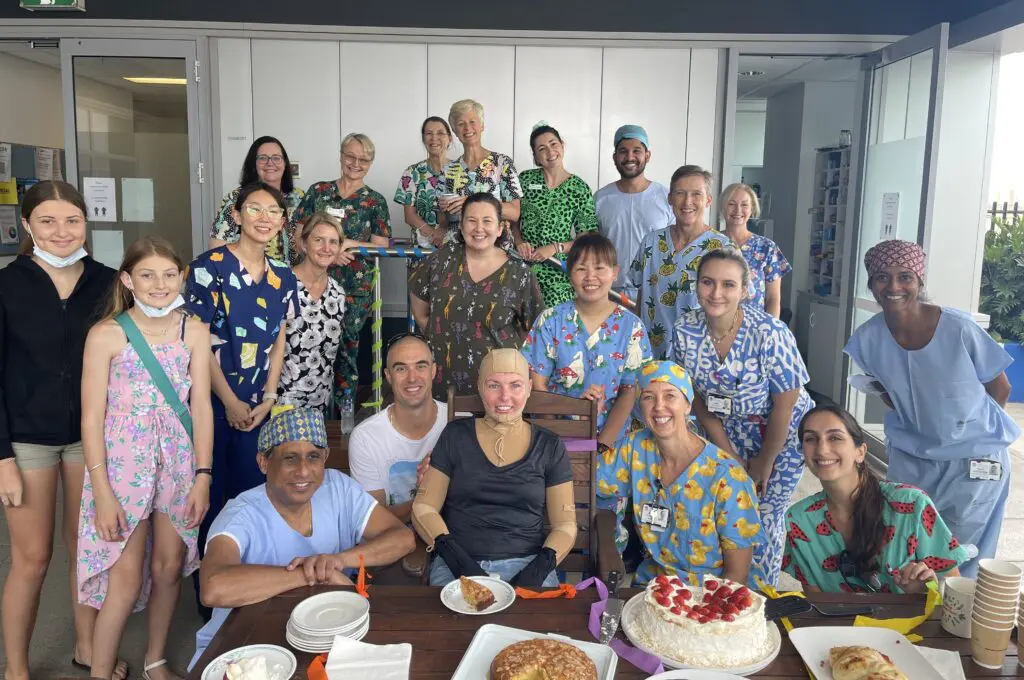
At the Severe Burns Injury Unit (SBIU), a dedicated multi-disciplinary team of surgeons, nurses, physiotherapists, occupational therapists, social workers, psychologists, speech therapists, acute pain team and dieticians worked together to deliver highly specialised burns care.
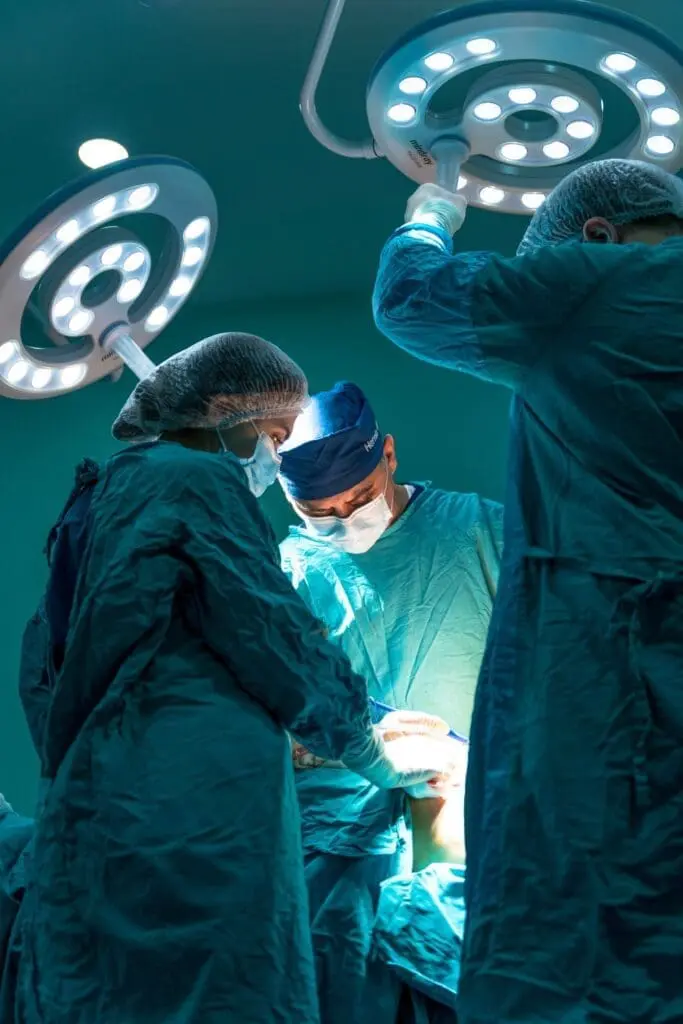
“Andrew sustained full thickness burns to 11% of his total body surface area (TBSA), including his face, chest, hands and back,” said Sally Trevaskis, Nurse Unit Manager, SBIU. “He required five days in intensive care in an induced coma, followed by nine weeks in the severe burns injury unit. During this time, he underwent multiple surgeries and skin grafts and went on to complete many months of specialised occupational therapy and physiotherapy.”
For patients like Andrew, timely access to specialist burns care is essential, as recovery is often complex and can extend over many months, if not years. The multi-disciplinary team in the SBIU worked collaboratively to provide comprehensive care – helping him rebuild strength and regain his independence.
“They provided unbelievable care, support and compassion,” Andrew says. “Dressing changes were intense, but they helped me through it, whether it was the pain relief medication, a reassuring word, or simply a hand on my shoulder.”
Living with the impact of burns
While Andrew’s survival is extraordinary, the impact of his burns injuries continues. Everyday tasks remain challenging. It changed his appearance; he struggles with confidence and lives with ongoing physical and emotional effects from the trauma.
He has lost some sensation in his hands but says he was lucky he didn’t lose them.
Recovery from burns does not end when a patient leaves hospital. Andrew continues to return to Royal North Shore Hospital for ongoing burns treatment and scar revision.
“The care, the professionalism, but also the way they treat you as a person – it’s hard to describe,” says Andrew. “They got me through the worst time of my life.”
How donor support transforms burns care
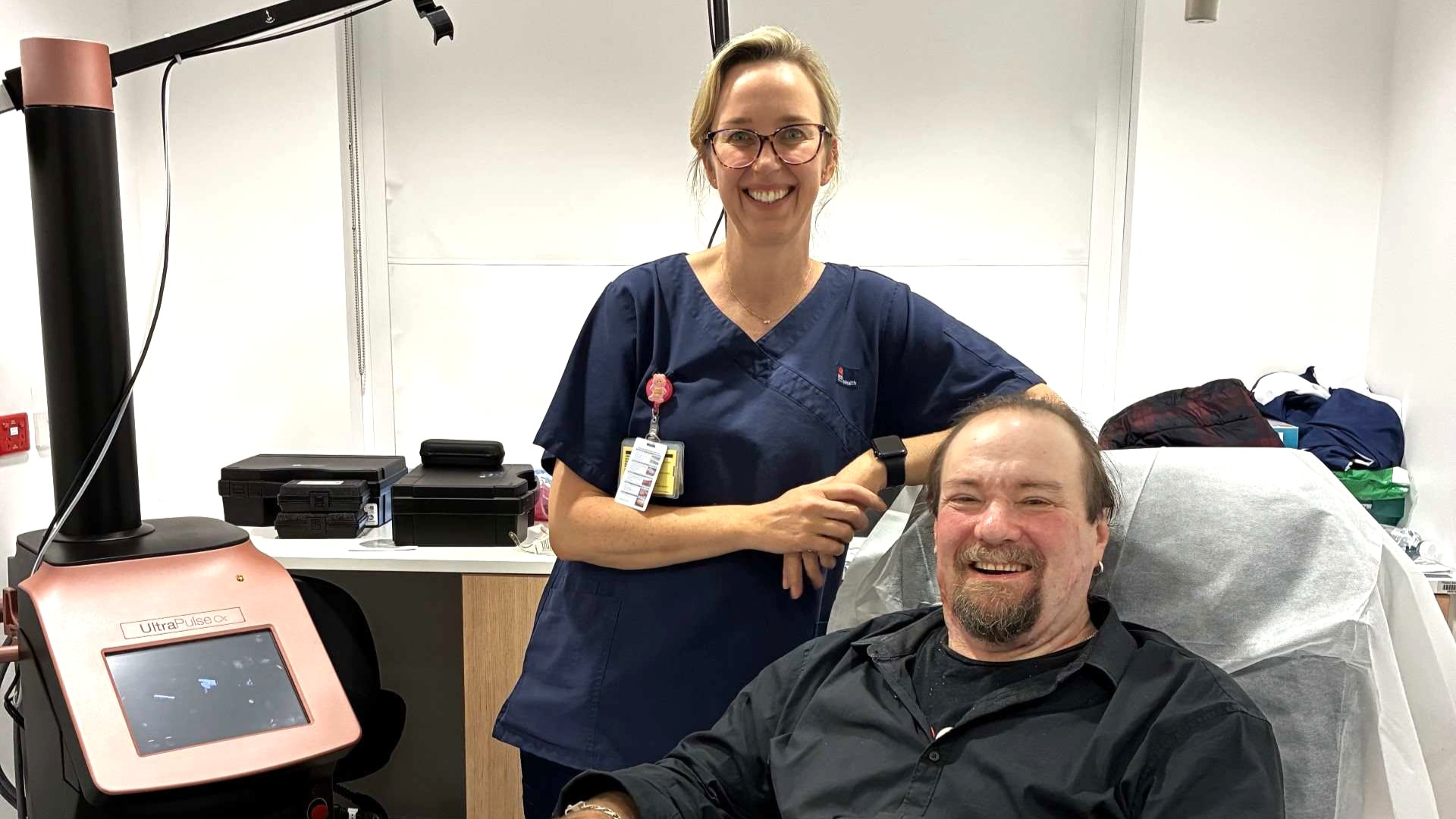
Thanks to the generosity of the late Alexandria Phirros and with the support of the NORTH Foundation, he is continuing his burns recovery with advanced laser treatment to reduce scarring, restore movement and rebuild his confidence.
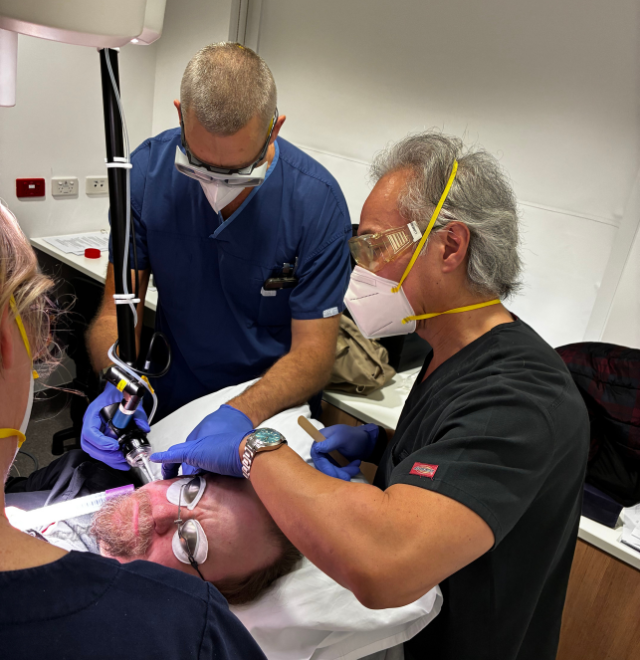
Recently, he began advanced burns therapy using a Lumenis UltraPulse laser, which helps to soften and flatten scar tissue, improving flexibility, mobility and comfort which is an important step in long-term burns recovery. The procedure, performed under local anaesthetic, uses fractional ablative technology* to deeply penetrate thick, contractive scar tissue, triggering collagen remodelling.
After his first treatment, Andrew said he could already feel a difference in his hands, with improved texture, movement and elasticity.
“For the first time, I feel like things might be improving,” he says.
The road ahead is still long, but with ongoing burns care, rehabilitation and the support of the SBIU team, Andrew is hopeful about the future.
Support from donors plays a vital role in stories like Andrew’s. It helps ensure people living with severe burns have access to the latest equipment, innovative burns treatments and specialised rehabilitation, long after they leave hospital.
You can help patients recover from severe burns by supporting the Severe Burns Injury Unit at Royal North Shore Hospital. Donate today.
*Ablative technology refers to a technique or device that removes, destroys or wears away material from a surface to achieve a desired outcome.