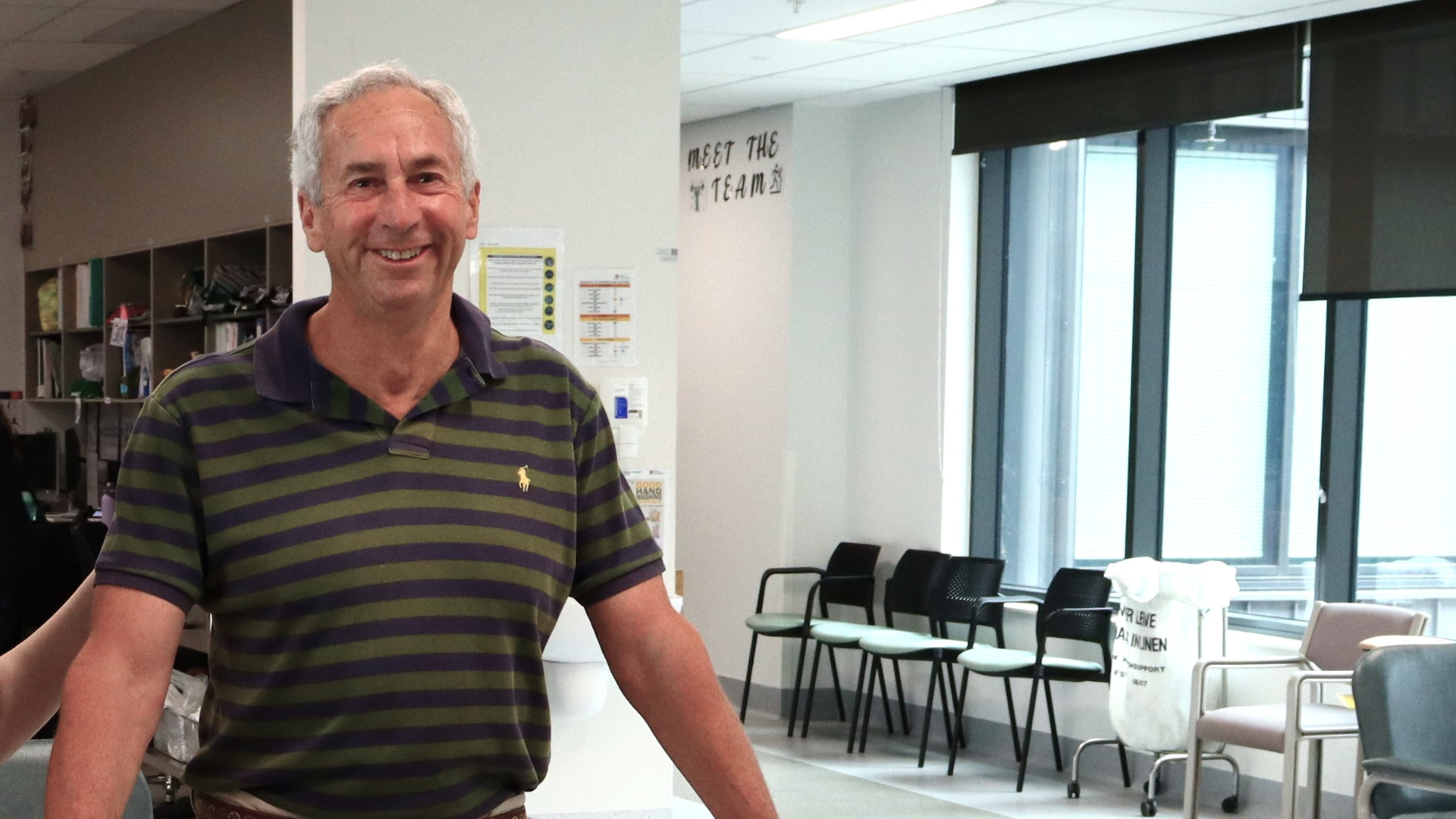
Howard was enjoying a relaxing morning ritual – coffee and friendly conversation at one of his favourite patisseries when it was interrupted by a sudden stroke.
Fit, active and in his late 60s, Howard is a non-smoker, rarely drinks alcohol, doesn’t eat red meat and walks or runs most days. In fact, Howard felt he was so healthy that he didn’t have the need for a regular GP. But that morning, as he chatted with local regulars Brenda and Alan, he suddenly found himself spilling coffee down his shirt. While Alan thought he was joking, Brenda recognised he wasn’t well and immediately called an ambulance. Howard was lucky that Brenda acted so quickly, which is crucial to prevent permanent brain damage from a suspected stroke.
“I was awake, but I couldn’t move or speak,” Howard recalls. “I could hear everything, but I couldn’t respond.”
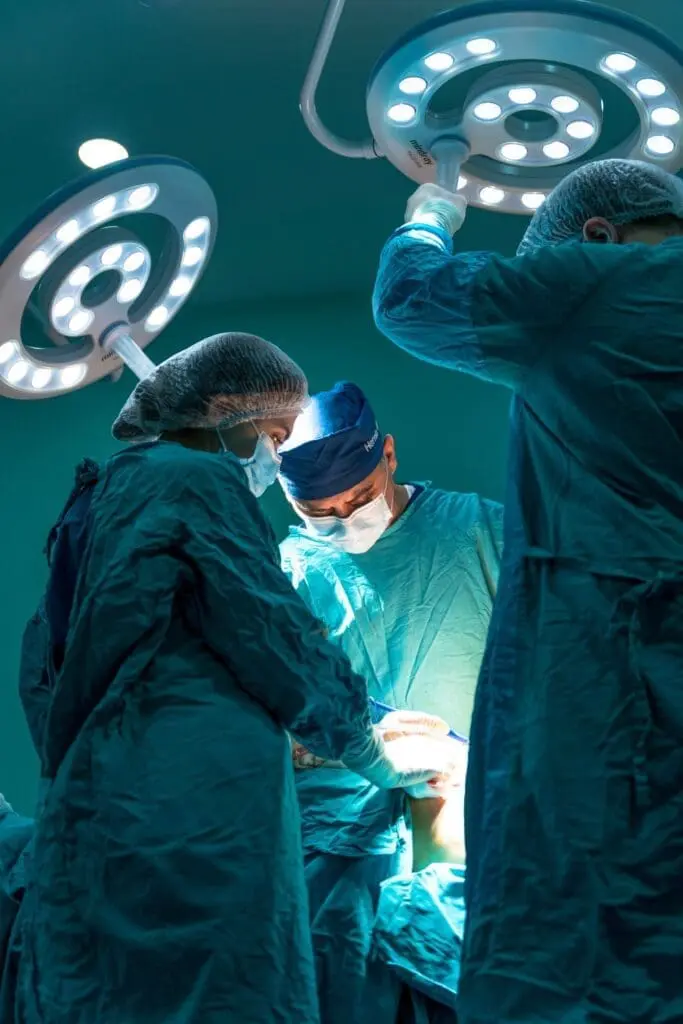
Fortunately, paramedics were just around the corner. Within minutes, Howard was rushed to Hornsby Ku-ring-gai Hospital’s Emergency Department where the Acute Stroke Unit (ASU) team began urgent blood tests, assessments, scans and treatment.
Hornsby Ku-ring-gai Hospital has a nationally accredited, purpose-built ASU providing lifesaving care for stroke patients. It offers early assessment, thrombolysis (clot-busting) and rehabilitation within the same facility. This certified unit features specialist staff and dedicated beds, ensuring better recovery chances for patients.
A Sudden Stroke Changed Howard’s Ability to Communicate
Howard was advised he had suffered an ischemic stroke. It was caused by atrial fibrillation which formed a clot that travelled to his brain, restricting the blood flow. Even though he received clot-dissolving medication within the critical treatment window, Howard’s ability to speak and process language had been severely affected.
As his wife Anna sat by him in the ASU, she became increasingly concerned as his condition appeared to deteriorate throughout the day. He could no longer recall his name, his date of birth or form complete sentences. Anna’s worry intensified when he was unable to remember her name. Although his healthcare team reassured her that his recovery would take time, Anna could only see a long and uncertain road ahead.
“I was so worried that Howard’s personality would be permanently affected,” said Anna. “He’s outgoing and conversation is such an important part of who he is. Watching him struggle to speak and make sense of his words was frightening.”
Rebuilding Strength and Confidence After Stroke
Howard’s rehabilitation began immediately in the ASU. He worked with physiotherapists, occupational therapists and speech pathologists on his mobility, cognition and communication. Therapists guided him through exercises that mirrored everyday tasks – balancing, reaching, memory games, concentration tasks and structured language activities.
Speech pathologist Sara-Jane Arns explained that Howard had aphasia because of his stroke – a language disorder caused by damage to the brain’s speech centres.
“Aphasia doesn’t affect intelligence, but it affects a person’s ability to speak, understand speech, read and write,” said Sara-Jane. “People often know exactly what they want to say – they just can’t access the words.”
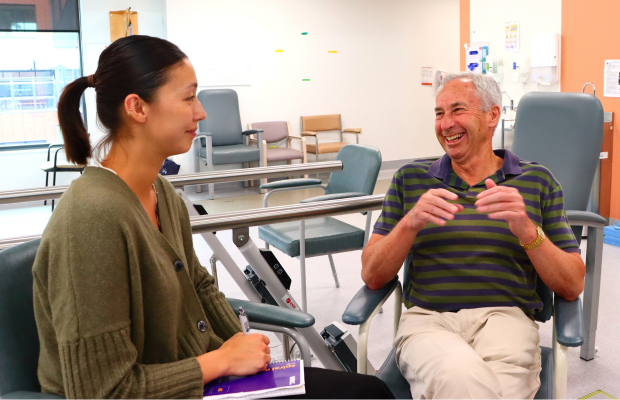
Howard slowly began to find his voice again and by day two he was starting to speak and walk unaided.
While in the ASU, Howard says he and Anna received clear and helpful resources and information on stroke recovery. The ASU team were flexible and approachable in how they supported Howard’s rehabilitation and addressed their concerns. After three days in the ASU, he was then transferred to a ward where he continued to attend the rehabilitation gym.
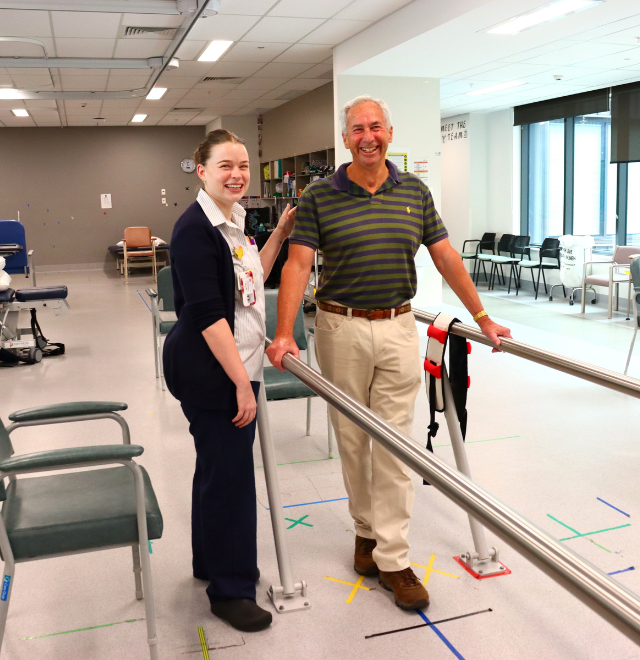
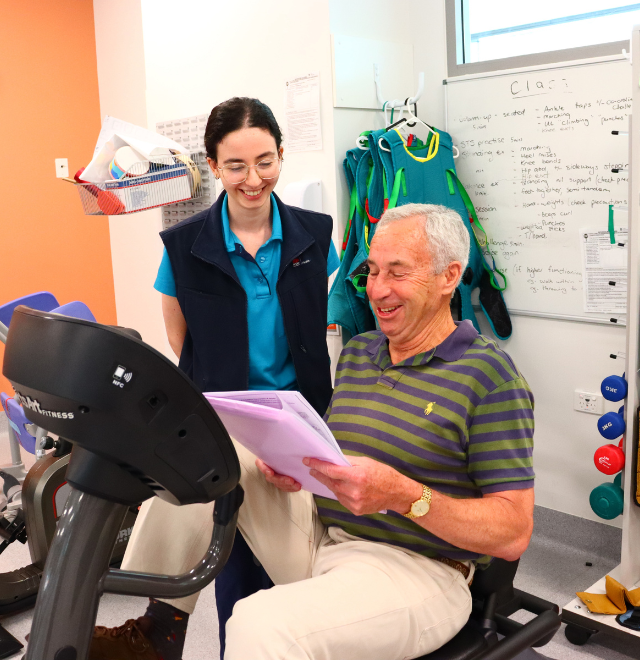
As Howard began to feel confined within the hospital, his physiotherapy team adapted his rehabilitation to suit his personality and level of fitness. Allied Health Assistant Isaac Player took him for walks outside the hospital – sometimes even jogging around the nearby oval – which helped Howard regain a sense of normality.
When Howard was asked what his aims were, he responded that he needed help to complete paperwork, structure ideas and rebuild the ability to hold a complex conversation. Physically he was fine, but he continued to struggle with speech and upper-level communication, such as organising thoughts, processing information and sustaining complex conversations.
After a month in Hornsby Ku-ring-gai Hospital, Howard continued outpatient rehabilitation twice a week for another month, including ongoing speech therapy. During this time, he also received follow-up care for his atrial fibrillation, which involved a successful cardioversion – a medical procedure using controlled electrical shocks to reset an abnormal heart rhythm.
Today, Howard has been able to return to coffee and conversation. He continues to recover cognitively and is hopeful about returning to the life he once knew before stroke – while contemplating full retirement.
He reflects with gratitude:
“The treatment I received was excellent. The team from the Acute Stroke Unit reacted quickly, communicated clearly, and were incredibly supportive. I’m lucky – my age and fitness helped, but the care from the rehabilitation team made the real difference, motivating me to do more than my best.”
Your donation to the ASU can help provide advanced equipment, enhanced rehabilitation resources and ongoing support to patients recovering from stroke.